
The delegations from the US and Iran head to Islamabad on Friday, carrying a ceasefire that is already fraying, a Strait that is technically open and practically closed, and a negotiating agenda that would challenge even parties actually negotiating in good faith, which these groups are not. Prem Panicker continues his must read blog on the Iran War.

Pakistan's Prime Minister Shehbaz Sharif has engaged in extensive diplomatic efforts to de-escalate the conflict in West Asia, offering to host talks between the US and Iran and engaging with leaders from Saudi Arabia, Qatar, Malaysia, the UK, China, and the European Union.
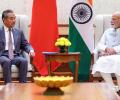
China's Foreign Minister Wang Yi expressed China's anticipation for Prime Minister Narendra Modi's visit to the Shanghai Cooperation Organisation (SCO) summit, emphasizing the importance of strong India-China relations and mutual cooperation.

Pakistani Prime Minister Shehbaz Sharif is actively engaged in diplomatic efforts to de-escalate tensions in West Asia, offering to host talks between the US and Iran and engaging with regional leaders to promote peace and stability.

Chaffing under public ridicule in the US as well as internationally for having 'lost' the war, Trump is under immense pressure to do something, cautions Ambassador M K Bhadrakumar.
Defence Minister Rajnath Singh has emphasised the need for India to develop a robust drone manufacturing ecosystem to enhance its defence capabilities, drawing lessons from recent global conflicts.

Trump may strike. He may announce productive talks and extend again. He may do both at the same time. Iran will not open the Strait on someone else's terms, so no matter what happens, that problem will remain unsolved. And the IRGC will still be collecting its $2 million toll from every ship bold enough to ask permission to pass.
Pakistan's Prime Minister Shehbaz Sharif has offered to mediate between the US and Iran to de-escalate the ongoing conflict in West Asia, following a joint US-Israel attack on Iran. Sharif has been in contact with Saudi Arabia, the UAE, and other nations to promote dialogue and diplomacy.

A US federal government commission has raised concerns about the state of religious freedom in India, recommending its designation as a 'Country of Particular Concern' and suggesting targeted sanctions.

The clock on the ceasefire is running out. But everyone's already whispering about round two, possibly as soon as this weekend.

By appearing to privilege ideological affinity over strategic balance, India risks eroding the trust painstakingly built across West Asia. Once the perception takes hold that India's friendship is conditional and transactional, rebuilding credibility will be difficult, warns Amberish K Diwanji.

'Was the five-day pause ever meant to hold, or was it simply another instrument of signaling, of positioning, of buying time in a war where even the pauses are tactical?' asks Prem Panicker in his must read daily blog on the Gulf War.

'The next two to three weeks will not be decided in Washington.' 'They will be decided in Tehran, in whatever calculation Iran makes about the costs of continued resistance against the costs of appearing to have yielded.'

If the Iranian regime needs to be punished for promoting quasi-terrorist outfits like Hezbollah and Hamas, then what about Pakistan which has spent decades exporting terror around the world, killing thousands, particularly in Afghanistan and India? asks M R Narayan Swamy.

By ensuring Myanmar remains dependent on Chinese economic and military assistance, Beijing indirectly exerts pressure on India's North Eastern states, making New Delhi's regional security strategy even more complex.

West Asia conflict triggers sharp sell-off in Indian markets, with realty, banking and auto stocks leading losses amid energy shock fears.

Formula One has cancelled the Bahrain and Saudi Arabian Grands Prix scheduled for April due to escalating Middle East tensions, reducing the 2026 F1 calendar from 24 to 22 races.

United States President Donald Trump reiterated the claims of having to do 'something' about Greenland, saying that if US doesn't take any action, Russia and China would spring in and that Washington, DC does not want to have them as neighbours.

United States President Donald Trump has said that Iran is under close watch and a 'massive fleet' is heading towards the Gulf region.

'There is no shortage of fuel whatsoever.' 'India is stock surplus as far as petrol and diesel are concerned.'

Galgotias University is under fire after showcasing a robotic dog that sparked controversy over its true origin and whether it was misrepresented as in-house technology.
United States President Donald Trump has named 23 countries as the major drug transit or major illicit drug-producing countries in a 'Presidential Determination' submitted to Congress.

'Uncertainty level A in the morning, uncertainty level B in the afternoon. If I answer about tariff rates now, I'll be outdated by the evening.'

Pakistan has approached the Asian Development Bank (ADB) for a USD 7 billion loan to upgrade a major railway line after China apparently declined to support the project. The development of Mainline-I (ML-I) railways between Peshawar and Karachi is stuck due to a lack of funds.

'Nobody explained why. After that there was panic buying, there was hoarding -- and then nothing reached us.'

Texas Governor Greg Abbott has directed state agencies and public universities to suspend new H-1B visa petitions through May 2027, a move likely to affect Indian professionals. The order comes amid ongoing debate over skilled immigration and potential impacts on academic research and innovation.
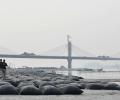
China has formally started the construction of a USD 167.8 billion dam over the Brahmaputra River in Tibet, close to the Indian border in Arunachal Pradesh, raising concerns in India and Bangladesh.

Restoring weighted tax deductions and adopting a petty patents regime can foster firm-level innovative activity critical for competitiveness, points out Nagesh Kumar.

Vice Admiral Li Hanjun, chief of staff of the People's Liberation Army Navy (PLAN), and Liu Shipeng, deputy chief engineer of China National Nuclear Corporation, have been expelled from the National People's Congress (NPC), the Hong Kong-based South China Morning Post reported.

Taking Kharg would give the US control over virtually all of Iran's oil exports and thus provide significant leverage, notes Prem Panicker in his must read daily blog on the Gulf War. It would also put American troops within range of Iran's remaining missiles, drones, and artillery on a piece of real estate that is just eight square miles in size, and just 15 miles from the Iranian mainland.

The agency also ran a parallel investigation into cyber-slavery and the organised digital exploitation networks in Southeast Asia, with slave compounds in Myanmar and neighbouring areas, that are emerging as incubators for the execution of such frauds.

Israel and the United States had a plan. Iran punched back. And now the Gulf is reeling, the world is beginning to feel the pain and, as on date, no one in Washington or Tel Aviv appears willing to admit that the punch has landed, notes Prem Panicker, continuing his must-read blog on the war in the Middle East.

What we are watching is something different: A fog manufactured and maintained by the people who started the war, so that the question of why it was started never has to be answered, observes Prem Panicker in his must read blog on the war in the Middle East.

Iran is fighting a different war: Older, slower, and in some ways more dangerous. Iran doesn't need to shoot down an F/A-18. It only needs to make the Strait of Hormuz feel dangerous long enough for insurance markets, shipping companies, and oil futures traders to do the rest. Prem Panicker continues his must-read daily blog on the war in the Middle East.

India's high cost of capital due to relatively shallow corporate bond markets, limited institutional investor depth, sovereign risk premia, and regulatory restrictions on capital flows, is a constraint on private investment and long-run growth, the Economic Survey, authored by Chief Economic Advisor (CEA) V Anantha Nageswaran, said.

The IMF on Monday raised India's growth projection to 7.3 per cent for fiscal 2025-26, up 0.7 percentage point from its October forecast, on the back of better-than-expected performance of the economy. The Washington-headquartered multilateral lending agency has also revised India's Gross Domestic Product (GDP) growth forecast to 6.4 per cent for fiscal year 2026-27 beginning April 1, 2026, from its earlier estimate of 6.2 per cent.

'The unexpected turn of events and assertion of sovereignty by the Taliban has baffled the Pakistan security establishment.'
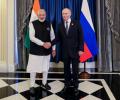
The national capital is on high alert on Thursday, as a multi-layered security grid has been enforced for Russian President Vladimir Putin, who is landing in Delhi in the evening for his two-day visit to India.
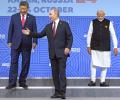
Russian Foreign Minister Sergey Lavrov alleged that NATO is blatantly trying to lure India into anti-China intrigues.
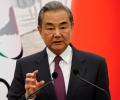
China on Tuesday called for a 'comprehensive and lasting ceasefire' between India and Pakistan, urging both countries to properly handle their differences through dialogue.
